

A diagnosis, a referral, or a growing list of questions can make the search feel urgent. When you search for autism therapy in Littleton, Colorado, you are not simply looking for an open appointment. You are looking for people who will understand your child, communicate clearly with your family, and create meaningful opportunities for growth.
The right therapy setting should feel both supportive and purposeful. Your child deserves to be treated with dignity while learning skills that can make everyday life easier, more connected, and more joyful. For many families, Applied Behavior Analysis, or ABA therapy, is one evidence-based option that can support communication, play, social connection, daily routines, and independence.
What autism therapy in Littleton, Colorado should provide
Quality autism therapy begins with getting to know the whole child. Autism is a spectrum, and no two children have the same strengths, needs, interests, communication styles, or goals. A thoughtful provider will not offer a one-size-fits-all plan. Instead, the clinical team should complete a careful assessment, listen to your priorities, and build a tailored care plan around skills that matter in your child’s life.
In ABA therapy, a Board Certified Behavior Analyst, or BCBA, oversees assessment and treatment planning. The BCBA uses data to understand what is helping a child learn and where additional support may be useful. This supervision matters because therapy goals should be reviewed regularly, adjusted when progress changes, and connected to real-life needs rather than practiced in isolation.
For a young child, a meaningful goal may involve requesting help, joining a family activity, tolerating a new routine, or building play skills. For an older child or teenager, therapy may focus more on conversation, flexibility, self-advocacy, community skills, friendships, or greater independence with daily tasks. Progress is not a race. It is the steady development of useful skills at a pace that respects the individual child.
Positive, play-based learning matters
Modern ABA can be engaging, encouraging, and built around what motivates a child. Positive reinforcement means recognizing and supporting behaviors and skills you want to see more often. Reinforcement may be a favorite activity, a break, encouraging feedback, access to a preferred toy, or the satisfaction of completing something independently. It is individualized, because what feels rewarding differs from child to child.
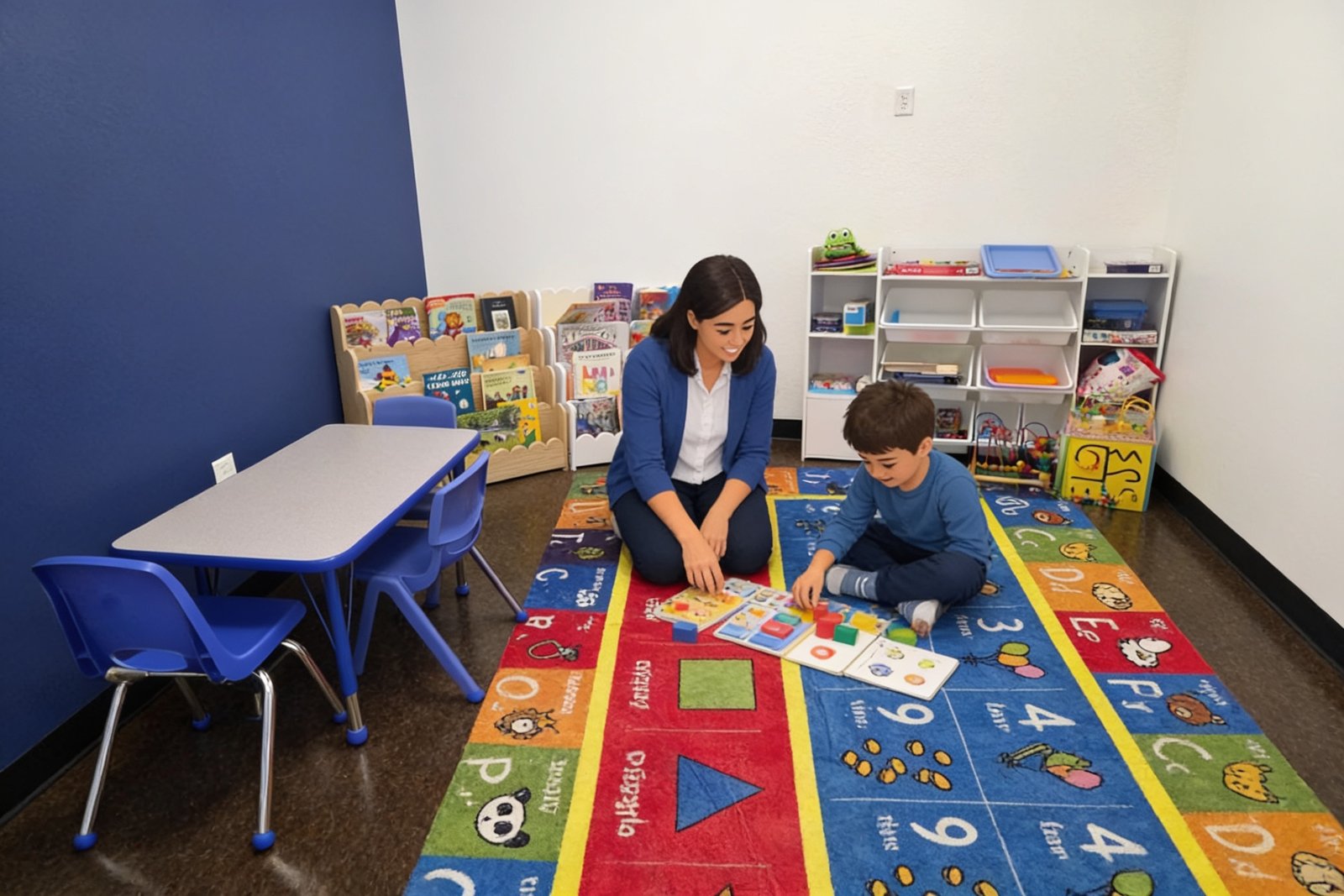
Many families also benefit from natural environment training, often called NET. This approach brings learning into play, routines, and everyday interactions. A child might practice communication while choosing a game, taking turns during an activity, or asking for a snack. These moments can help skills feel more relevant and easier to use outside the therapy setting.
A clinic-based program can offer structure, social opportunities, and consistent support, while family involvement helps carry learning into home and community life. Neither setting replaces the other. The best fit depends on your child’s age, goals, school schedule, sensory needs, and the kind of support your family can realistically maintain.
Questions to ask before choosing a provider
The first conversation with an autism therapy clinic should leave you with clearer answers, not more pressure. It is reasonable to ask who will supervise your child’s services, how often the BCBA will be involved, and how goals are selected. You can also ask how the team monitors progress and what happens if a strategy is not working.
Ask about the clinic’s approach to communication and parent collaboration. Families should receive understandable updates, opportunities to share concerns, and practical guidance that fits their home life. Parent or caregiver training is not about asking you to become a therapist. It is about giving you useful tools and a shared language so the people who know your child best can feel informed and supported.
Safety and respect should be visible in every part of care. Observe whether staff speak to children kindly, honor communication differences, and create a welcoming environment. Ask how the clinic trains team members, how it supports transitions, and how it helps children participate in therapy without losing the joy of being children.
It can also help to ask about scheduling and availability early. Families in Littleton, Centennial, and the South Denver area often balance school, work, siblings, appointments, and travel. A provider should be transparent about the intake process, expected schedule, and whether services can be coordinated around educational commitments when possible.
Making therapy goals useful beyond the clinic
The most valuable therapy goals are connected to everyday participation. A child may learn a skill with a therapist first, but the larger goal is being able to use it with parents, siblings, teachers, peers, and community members. This is sometimes called generalization. It means a skill is becoming flexible and functional, not limited to one room or one person.
Local routines can offer natural opportunities to practice. A child who is working on waiting, requesting, or taking turns may build those skills during a family outing to deKoevend Park. A child preparing for school transitions may benefit when goals align with the routines they encounter in Littleton Public Schools or Cherry Creek School District. Therapy teams should collaborate with families around the real environments that matter to them, while respecting each family’s privacy and priorities.
This does not mean every outing or family moment needs to become a lesson. Children need downtime, play, connection, and the freedom to be themselves. Effective care finds a healthy balance: structured teaching when it is helpful and natural practice when the moment is right.
How families can recognize meaningful progress
Some milestones are easy to see, such as using new words, completing a morning routine with less assistance, or joining a peer activity. Other gains are quieter. A child may recover from a change in plans more comfortably, communicate a need before becoming frustrated, or show more confidence trying something new.
Data is an important part of evidence-based ABA therapy, but it should never be the only way progress is discussed. A strong clinical team explains what the numbers mean in plain language and listens to what you are seeing at home. If a goal looks successful on paper but is not helping in daily life, that is valuable information. Therapy should remain responsive to the child and family, not tied to a checklist.
Families may also see uneven progress. New skills can take time to settle, and developmental growth is rarely a straight line. Consistency, collaboration, and realistic expectations make a difference. A provider should be honest about this while still helping families recognize the small steps that build toward larger independence.
Practical details that deserve clear answers
Logistics can affect whether a therapy plan is sustainable. Before enrolling, ask the clinic which insurance plans it accepts, whether it works with Colorado Medicaid, and what authorization or referral steps may be required. Benefits and coverage vary by plan, so it is wise to confirm details directly with both the provider and your insurance company.
You may also want to understand how often your child is expected to attend, what a typical session includes, and how missed appointments are handled. There is no universal number of therapy hours that fits every child. Recommendations should be based on clinical assessment, family priorities, school demands, and your child’s ability to participate comfortably.
If your family is near Southglenn, 80122, or nearby communities such as Highlands Ranch, Greenwood Village, Lone Tree, or Englewood, convenience can be more than a minor detail. A manageable drive and a schedule your family can sustain may support consistency over time.
At Success On The Spectrum Centennial ABA Therapy, serving families in Centennial and nearby Littleton communities, care is designed to be compassionate, collaborative, and BCBA-supervised. The goal is not to make children fit a narrow expectation. It is to support joyful learning and help each child build skills that make a genuine difference at home, in school, and in the community.
Choosing autism therapy is a significant family decision, and you do not need to have every answer before making the first call. Start with the questions that matter most to your child, trust your observations, and look for a team ready to partner with your family through each meaningful milestone.
 Ready to See the Difference for Yourself?
 Success On The Spectrum Centennial
7562 S University Blvd., STE FF
Centennial, CO 80122
 Call Now: 720-372-2659
 Email: centennial@successonthespectrum.com
Book a Facility tour of SOS Centennial online
 Learn More: https://successonthespectrum.com/location/centennial/
Follow us on social media:
 Facebook – Success On The Spectrum Centennial
 Instagram – @soscentennial
“Where Every Child’s Progress Is Our Purpose.”
Don’t wait. Don’t wonder.
Schedule your free tour today and see why families across the Denver Metro area are choosing Success On The Spectrum Centennial.
Enrollment Now Open • No Waitlist • BCBA-Led Care • Play-Based ABA




One Comment