
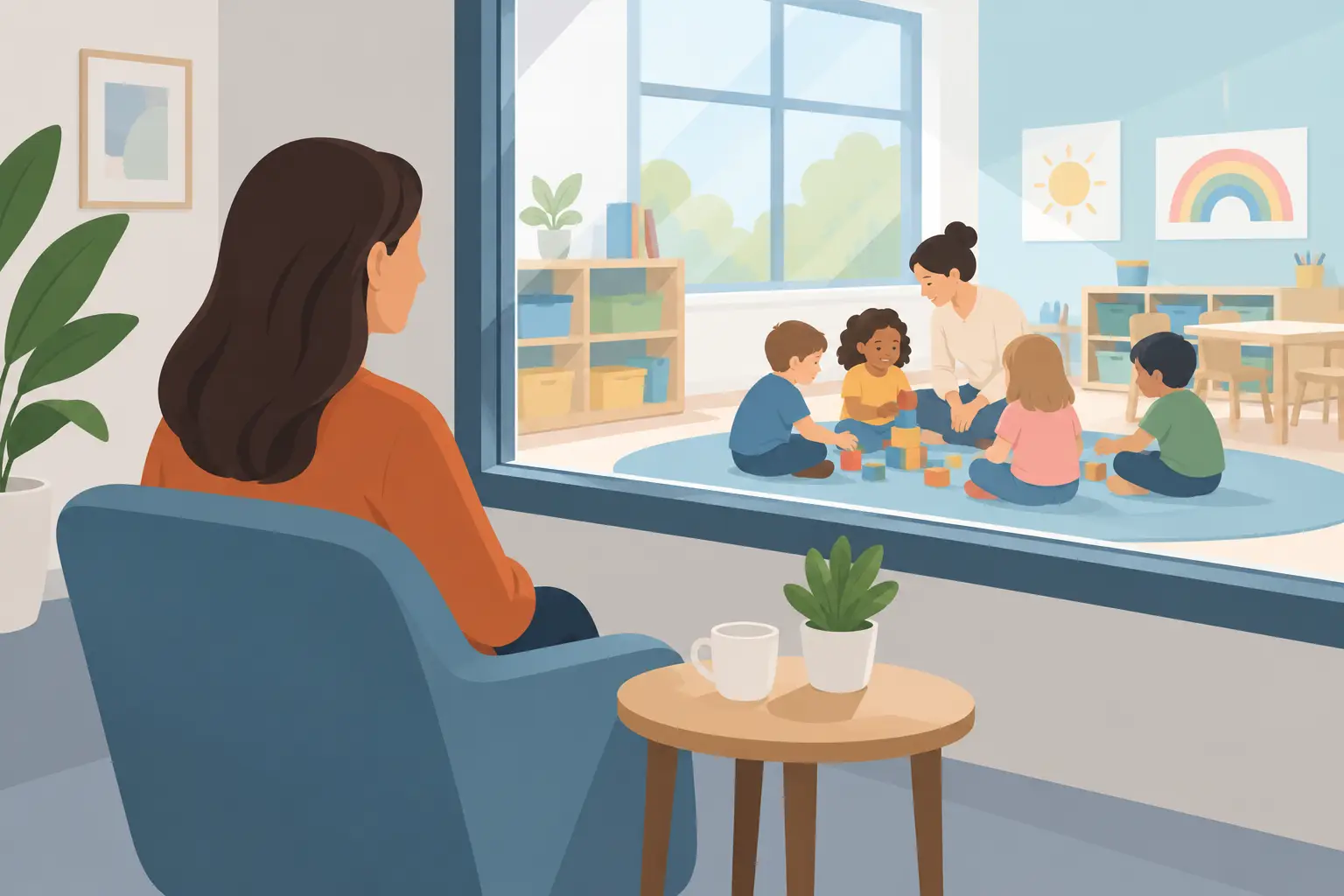

A parent’s first question after dropping off a child for ABA therapy is often simple: “What will I be able to see?” Parent viewing rooms & live observations can offer meaningful reassurance, but they work best when they are thoughtfully designed around the child’s comfort, privacy, and ability to engage in joyful learning.
For many families, observing therapy helps transform unfamiliar clinical terms into something tangible. You may see your child practicing a request during play, taking turns with a therapist, following a visual routine, or celebrating a small but meaningful milestone. Those moments can build trust and help families carry helpful strategies into daily life at home and in the community.
Why Observation Matters in ABA Therapy
Modern ABA therapy is collaborative. A child’s BCBA, Registered Behavior Technicians, caregivers, teachers, and other appropriate providers each bring valuable information to the care team. Parents know their child’s communication style, interests, routines, sensory preferences, and strengths in ways no initial assessment can fully capture.
Live observation gives caregivers a clearer window into the therapy process. Rather than receiving only a recap at pickup, a parent may be able to see how therapists use positive reinforcement, prompting, play, and natural environment teaching to support individualized goals. Natural environment teaching means practicing skills in the kinds of everyday activities where they will be useful, such as choosing a game, washing hands, sharing materials, or asking for help.
Observation can also make parent collaboration more productive. A caregiver who has watched a therapist support a communication attempt may find it easier to ask specific questions: What prompt was used? When should we pause and wait? What reinforcement is most motivating right now? These discussions can help create consistency without expecting families to turn home life into a therapy session.
What Parent Viewing Rooms Are Designed to Do
A parent viewing room is generally a designated space where a caregiver can observe therapy without entering the treatment area or interrupting the session. Depending on a clinic’s layout and policies, the room may use one-way viewing windows or a secure live video feed. The goal is not to evaluate every interaction minute by minute. It is to provide a respectful way for families to stay connected to their child’s care.
A well-planned viewing space supports both family involvement and clinical focus. Children often benefit from having clear expectations about therapy time. If a child can see a parent nearby, they may understandably want to leave an activity, seek reassurance, or shift their attention away from learning. A separate observation space can reduce those distractions while still allowing a caregiver to feel informed.
At the same time, viewing rooms are not the right fit for every child or every stage of care. Some children are comfortable knowing a parent is close. Others may become more settled when drop-off and therapy routines are predictable and separate. A BCBA can help determine an approach that supports each child’s emotional comfort, independence, and progress.
Live observation is not a test
It is natural to feel alert when you are watching your child receive a new service. Parents may notice moments of excitement, hesitation, frustration, or transition. None of those moments alone tells the full story of a therapy program.
ABA sessions are active learning environments, not performances. A therapist may pause to give a child time to respond, change an activity when interest fades, or help a child practice tolerating a small disappointment safely and supportively. Progress is usually built through many responsive, individualized interactions over time.
If something is unclear, it is appropriate to ask about it. The best time is typically after the session or during a scheduled parent meeting, so the therapist can keep their attention on the child in the moment. Families deserve clear, respectful explanations of the strategies being used and how those strategies connect to their child’s goals.
Privacy and Dignity Come First
Any discussion of live observations should include privacy. Therapy clinics serve multiple children and families, each entitled to confidentiality and dignity. A child’s session should never become casual entertainment or a topic of discussion outside the care team.
For this reason, ethical clinics set clear rules around viewing access. Observation is generally limited to a child’s parent, legal guardian, or approved caregiver. Recording, photographing, screen capturing, or sharing what is viewed should not be permitted. Staff should also explain how the clinic protects confidential information when more than one child is receiving services nearby.
Privacy also includes respecting a child’s experience. As children grow, their comfort with being observed may change. Older children and teenagers, in particular, may benefit from age-appropriate conversations about what observation looks like and why it occurs. Their preferences and dignity should be part of thoughtful, family-focused care.
How Live Observations Support Better Family Collaboration
Watching a session is helpful, but it is only one part of caregiver involvement. The most useful observation experiences are paired with communication from the clinical team. A BCBA may review a child’s goals, explain the purpose of an activity, and discuss how data informs decisions about teaching strategies.
Data in ABA is simply a structured way to track learning. It can include how often a child independently uses a communication skill, how much support they need for a routine, or whether a new skill is showing up across people and settings. Data helps clinicians recognize growth, identify barriers, and adjust tailored care based on the child’s response.
Caregiver training offers a more active opportunity to participate. During these meetings, parents can practice supportive strategies with coaching from the BCBA, discuss routines that matter at home, and share changes that may affect the child’s day. A live observation might spark a useful conversation, but caregiver training helps turn that insight into practical support.
For example, a parent may observe that their child is especially engaged by a particular game or type of praise. The care team can help explore whether that motivation can support communication, transitions, or social play at home. The focus remains on meaningful skills and positive family routines, not on asking parents to recreate a clinic session.
Questions to Ask About Viewing Rooms and Observation Policies
Before beginning services, families can ask direct questions about how a clinic handles observation. You may want to know whether live viewing is available, when it is appropriate, and whether it occurs through a viewing room or secure technology. Ask who has access, how confidentiality is protected, and whether recording is prohibited.
It is also helpful to ask how the team prepares a child for parent observation and what happens if the child becomes distracted or distressed. A clinic should be able to explain how it balances access for families with the child’s therapeutic needs. If in-person observation is not recommended at a particular time, the team should offer other ways to keep you informed, such as scheduled check-ins, progress updates, caregiver training, or team meetings.
Practical needs matter too. Parents in Centennial, Littleton, and across South Denver are often balancing therapy appointments with school schedules, work, siblings, and commuting. Ask whether observations need to be scheduled in advance and whether there are quieter times to visit. Clear expectations can make participation more realistic for busy families.
What Respectful Observation Looks Like
A supportive observer usually arrives ready to learn, follows clinic confidentiality expectations, and saves questions for an appropriate break. It may help to jot down a few neutral observations, such as which activities captured your child’s interest or which skill you would like to understand better.
Try to leave room for the child’s relationship with their therapy team to develop. If your child looks toward you, a clinician may have a plan for responding in a calm, encouraging way. Avoid stepping into the session unless the therapist invites you to participate. That boundary is not about excluding parents. It protects the child’s opportunity to build trust, practice independence, and stay engaged.
At AuraCalm ABA Therapy, families should expect compassionate communication, BCBA-supervised care, and a partnership that honors their expertise as caregivers. Observation, when appropriate, can be one more way to make care feel transparent and connected.
The most reassuring sign is not that every session looks perfect. It is seeing a care team that treats your child with patience and respect, welcomes thoughtful questions, and works with your family to recognize growth – one meaningful milestone at a time.