
A child may know exactly what they want to say, yet struggle to join a game at recess, wait for a turn in a conversation, or understand why another child suddenly looks upset. These moments can be hard for children and families alike. Social skills training for kids with autism offers supportive, individualized opportunities to practice these everyday interactions in ways that feel meaningful, respectful, and achievable.
Social growth is not about making a child act like anyone else. It is about helping them communicate needs, build relationships, participate in their community, and feel more confident navigating the social situations that matter to them. With compassionate, evidence-based support, small milestones can lead to greater independence at home, school, and in the community.
What Social Skills Training Can Support
Social skills are the tools people use to connect with others and move through daily life. For autistic children, some of these tools may develop differently or require more direct teaching and practice. Needs vary widely from child to child, which is why tailored care matters.
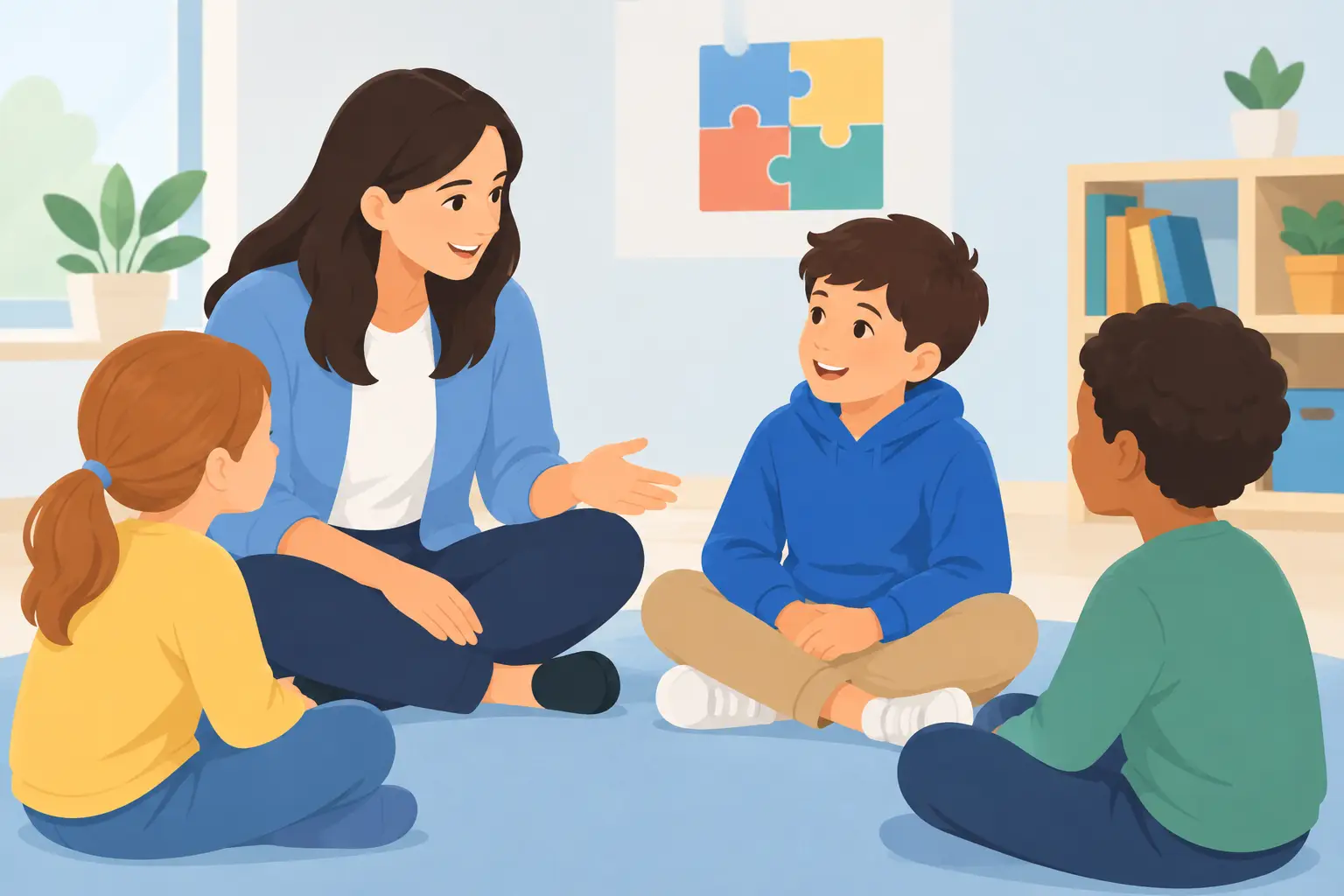
A social skills program may support communication skills such as starting a conversation, responding to a question, or asking for help. It may also address play skills, sharing space and materials, taking turns, recognizing personal boundaries, or understanding the expectations of a group activity.
For some children, the most valuable goal is learning how to communicate, “I need a break,” before becoming overwhelmed. For others, it may be greeting a classmate, inviting a sibling into a favorite activity, or ordering food at a restaurant. Teenagers may work on topics that fit their daily lives, including texting etiquette, self-advocacy, friendship boundaries, and preparing for social situations at work or in the community.
Progress does not always look like becoming more talkative. A child who uses an AAC device, gestures, or a few carefully chosen words can build meaningful social connections. Effective therapy honors each child’s communication style and focuses on practical, family-centered goals.
How Social Skills Training for Kids With Autism Works
Quality social skills instruction is active, positive, and connected to real life. Rather than simply telling a child what to do, an ABA team breaks a larger skill into manageable steps, provides clear practice opportunities, and uses encouragement that is meaningful to the child.
A Board Certified Behavior Analyst, or BCBA, begins with a thoughtful assessment and conversations with caregivers. The goal is to understand the child’s strengths, interests, communication needs, routines, and the situations that feel challenging. A treatment plan should be individualized, not based on a one-size-fits-all checklist.
Practice through play and daily routines
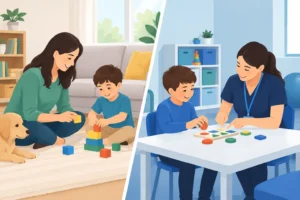
Young children often learn best while doing something they already enjoy. A therapist might use a favorite game, building activity, pretend play set, or outdoor activity to practice requesting a turn, responding to a peer, or handling a small change in the routine.
This approach is often called natural environment teaching, or NET. It brings learning into play and everyday activities rather than limiting practice to a table or worksheet. If a child loves trains, for example, the train set can become a joyful learning opportunity for requesting pieces, waiting briefly, sharing control of the track, and celebrating another person’s ideas.
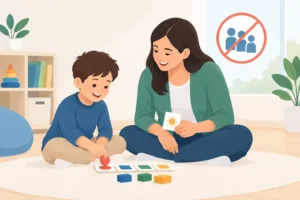
Structured practice can also be useful, especially when a child is learning a new skill for the first time. Visual supports, role-playing, modeling, and brief social stories may help make expectations clearer. The right balance depends on the child. Some benefit from predictable repetition before trying a skill in a busier setting, while others learn best in the moment.
Positive reinforcement and meaningful feedback
In ABA therapy, reinforcement means responding to a behavior in a way that makes the child more likely to use that helpful skill again. Reinforcement is not about forcing participation or withholding basic needs. It can be as simple as specific praise, access to a preferred activity, a high-five, or the natural result of a successful interaction.
For example, when a child asks a peer for a turn with a game and the peer responds positively, that interaction itself can be rewarding. A therapist may also offer warm, immediate feedback: “You waited and asked so clearly. Your friend understood what you wanted.” Over time, the goal is for social skills to work naturally in the child’s own world, not only during therapy.
Moving skills beyond the therapy setting
A skill learned with one trusted therapist is a beginning, not the finish line. Children need opportunities to practice with different people, in different places, and during realistic routines. This process is called generalization.
A child might first practice greeting someone at the clinic, then try it with a grandparent at home, a teacher at school, or a familiar neighbor. Families can support this growth without turning every interaction into a lesson. A short prompt before a playdate, a chance to rehearse ordering at a local restaurant, or praise after a successful interaction can be enough.
For families in Centennial, Littleton, and the South Denver area, community practice may happen during ordinary routines: a visit to deKoevend Park, a library program, an activity through Littleton Public Schools or Cherry Creek School District, or a family outing near Southglenn. The setting should fit the child’s comfort level and goals. A crowded event may be too much for one child and an exciting opportunity for another.
Why Parent Collaboration Matters
Parents and caregivers know their child best. A strong ABA program treats family members as essential partners, not observers. Caregiver collaboration helps ensure that social goals fit the family’s values, schedule, culture, and real daily needs.
Your clinical team may share the language, visual supports, or strategies your child is practicing so you can recognize and encourage progress at home. They may also ask what is happening at school, with siblings, or during community activities. This communication helps the team adjust goals when something is not working and celebrate gains that may seem small but are deeply meaningful.
It is reasonable to ask questions about any social skills program. Parents can ask how goals are selected, how therapists measure progress, how consent and assent are respected, and how skills will be practiced outside the clinic. A compassionate provider should welcome those questions and explain recommendations in clear, accessible terms.
What Progress Can Look Like
Social development is rarely a straight line. A child may use a new skill confidently one week and need more support the next, particularly during changes in routine, illness, school breaks, or unfamiliar environments. That does not mean the work is failing. It means the team should look at what the child needs in that moment.
Meaningful progress might look like a child looking toward a parent to share excitement, tolerating a brief turn during a game, independently asking for space, or participating in a group activity for a few more minutes. For another child, it may be using a communication device to greet a peer or accepting a different outcome without becoming overwhelmed.
These milestones deserve recognition because they can increase a child’s access to relationships, learning, and daily independence. The most helpful goals are not chosen because they appear impressive from the outside. They are chosen because they improve the child’s quality of life.
Finding Support That Fits Your Child
When considering social skills training, look for BCBA-supervised care that is individualized, positive, and grounded in evidence-based ABA principles. Ask whether therapy includes natural environment teaching, caregiver involvement, and plans for practicing skills across settings. It is also helpful to discuss scheduling around school, transportation, and insurance questions early so the plan can be realistic for your family.
At SOS Centennial, families can find supportive ABA services designed around each child’s strengths, needs, and goals. A welcoming clinical team can help you understand the next steps and create a plan that supports growth without losing sight of the child behind every goal.
Your child does not need to meet someone else’s definition of social success. With patient guidance, joyful learning, and the right support, they can build skills that help them be understood, participate more fully, and connect in ways that feel authentic to them.