
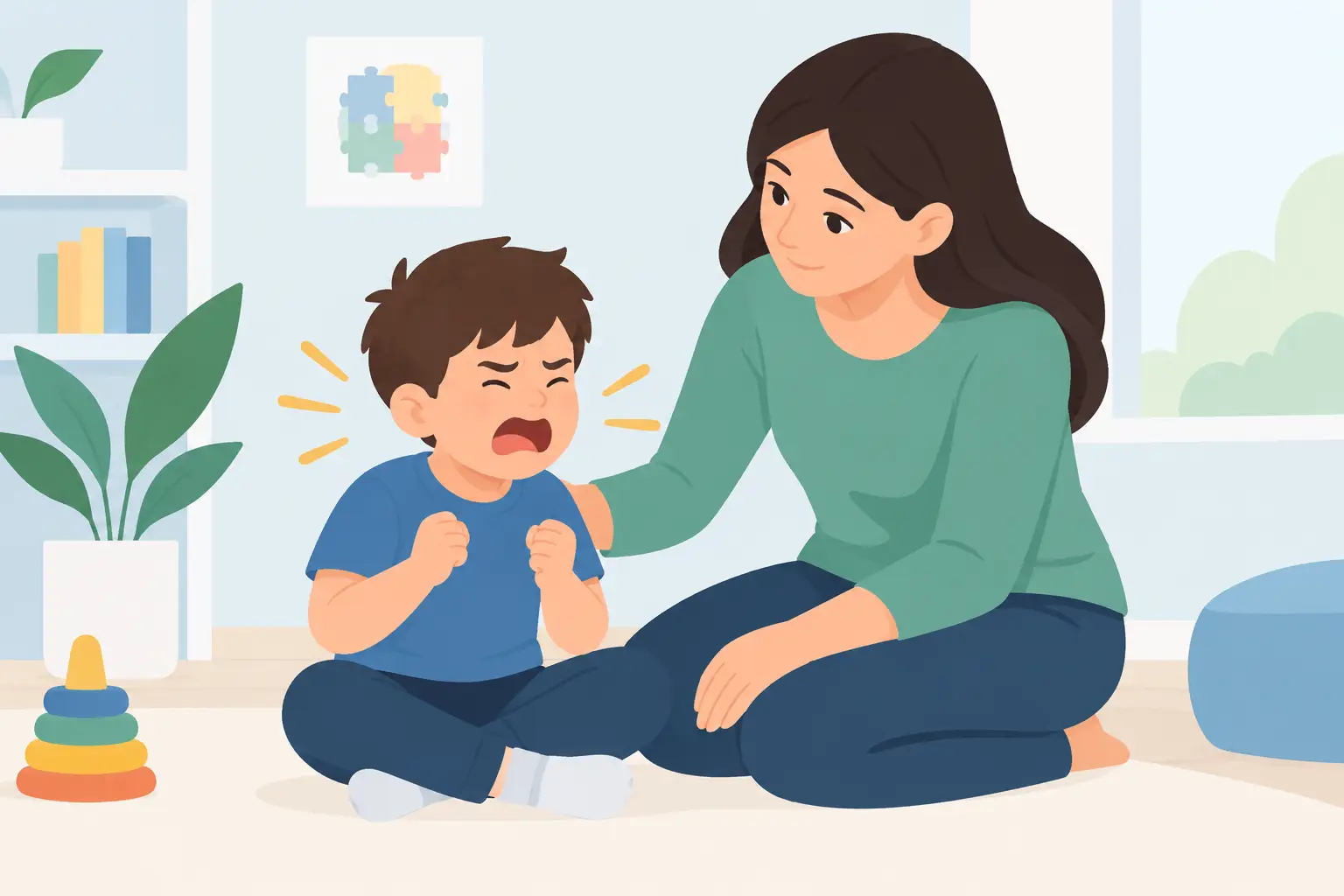

A tantrum in the grocery store, a sudden burst of tears after school, or a child who drops to the floor when it is time to leave the park can leave a caregiver feeling worried and alone. If you are looking for help for child with autism tantrums, the most useful starting point is understanding that behavior is communication. Your child is not trying to make your day harder. They may be showing that a demand feels too difficult, a transition came too quickly, communication broke down, or their environment has become overwhelming.
With compassionate support and the right assessment, children can learn safer, more effective ways to express what they need. Progress is often built through small, meaningful milestones: asking for a break, using words or a device to request help, waiting for a preferred activity, or moving through a change in routine with more confidence.
Tantrum or Meltdown? Why the Difference Matters
Parents often use the word “tantrum” to describe any intense emotional or behavioral moment. Clinically, however, it can be helpful to distinguish between a tantrum and a meltdown because the support a child needs may be different.
A tantrum may occur when a child wants something, wants to avoid a task, or is frustrated by a limit. The behavior may lessen when the child gains access to what they want or when they learn another way to communicate. A meltdown is more often related to overload. Noise, crowds, unexpected changes, fatigue, anxiety, or sensory discomfort can push a child beyond their ability to cope in that moment.
These experiences can look similar from the outside. A child may cry, yell, throw an item, run away, or refuse to move. Rather than trying to label the moment perfectly, focus on what happened before it, what your child may be communicating, and what support will help them regain a sense of safety.
Help for a Child With Autism Tantrums Starts With Patterns
One difficult episode does not tell the whole story. Patterns over time are much more informative. Consider what tends to happen before challenging moments. Is the behavior more likely during transitions, waiting, difficult schoolwork, mealtimes, sibling conflict, crowded spaces, or after a long day of masking and effort?
Sleep, hunger, illness, communication demands, and sensory input can all affect a child’s capacity to cope. For example, a child who manages the busy school day may have very little energy left for errands or homework. This is not a sign that they are being uncooperative. It may mean their coping resources are depleted.
A simple, nonjudgmental record can help identify themes. Note the setting, what happened right before the episode, the behavior you observed, and what happened afterward. You do not need to document every detail or keep a perfect journal. A few observations across several days can give a BCBA or other qualified professional valuable context.
Look for the function, not just the behavior
In ABA therapy, clinicians look at the function of behavior, or the reason it may continue to happen. A child may be trying to gain access to something, avoid a difficult situation, seek interaction, or meet a sensory need. More than one factor can be present at once.
This approach matters because the same outward behavior can have different causes. Crying at the end of a playground visit may reflect difficulty leaving a favorite activity. Crying during a noisy family gathering may reflect sensory overload. A helpful response changes depending on the child’s needs, which is why individualized, evidence-based assessment is so valuable.
What to Do in the Moment
When emotions are high, the immediate goal is not teaching a lesson or insisting on compliance. It is helping everyone get through the moment with dignity and as much calm as possible.
Use few words and a steady voice. Long explanations, repeated questions, and negotiating can be hard for a distressed child to process. If possible, reduce demands and environmental stimulation. This might mean stepping into a quieter area, lowering the volume, giving the child space, or pausing an activity that can safely wait.
Offer familiar supports when they are available and appropriate for your child. Some children benefit from a visual cue, a comfort item, headphones, a calm space, or a short reminder of a practiced coping skill. Others need time and quiet before they can accept any support. What works depends on the child, the setting, and the reason behind the behavior.
Keep safety in mind without making the moment feel punitive. If there is an immediate risk of injury, seek urgent professional help or emergency assistance as needed. For recurring aggression, self-injury, elopement, or other serious safety concerns, a direct assessment by qualified clinical professionals is essential. Families deserve individualized guidance, not a generic plan copied from the internet.
After your child has recovered, reconnect. A calm, supportive presence communicates that difficult moments do not change your care for them. Later, when your child is regulated and receptive, you can practice a replacement skill that makes future situations easier.
Build Skills Before the Hard Moment
The most lasting support happens outside of a crisis. Children are more able to learn communication, flexibility, and coping strategies when they are calm, engaged, and supported.
A replacement skill should be easier and more effective than the challenging behavior it is meant to replace. For one child, that may be saying, “Break, please.” For another, it may be handing over a break card, pointing to a picture, using a communication device, or learning to ask for more time. The method matters less than whether it is accessible, meaningful, and consistently honored when possible.
Visual schedules and first-then language can make routines more predictable. “First shoes, then bubbles” gives a child a clear sequence and a reason to cooperate. Practicing transitions during low-pressure parts of the day can also help. A two-minute warning may be useful for some children, while others do better with a visual timer or a consistent departure routine.
Positive reinforcement is another core ABA principle. Reinforcement means a response that increases the likelihood a skill will happen again. When a child uses a new communication skill, tolerates a small change, or transitions with support, respond with specific encouragement and meaningful access to what motivates them. Reinforcement is not bribery. It is a respectful way to show a child that their effective communication works.
How ABA Therapy Can Support Your Family
High-quality ABA therapy is individualized, collaborative, and focused on skills that matter in daily life. A BCBA-supervised team can assess patterns, identify meaningful goals, and teach replacement skills through positive, play-based learning. Natural environment training, often called NET, brings learning into everyday activities such as play, snack time, community outings, and conversations.
For a child who struggles with transitions, therapy may focus on communication, visual supports, flexibility, and coping skills. For another child, the priority may be tolerating a brief wait, asking for help, or participating in a home routine. The goals should reflect your child’s needs, strengths, family values, and developmental stage.
Caregiver collaboration is central to effective treatment. You know your child best: what brings them joy, what calms them, what routines are difficult, and what success looks like at home. A supportive clinical team listens to that expertise and helps make strategies practical for real family life.
For families in Centennial, Littleton, and the South Denver area, local support can also make it easier to coordinate care around school, work, and community routines. A child may need strategies that fit a morning in the Cherry Creek School District, an afternoon at deKoevend Park, or a busy weekend near Southglenn. Therapy is most useful when it supports growth where life actually happens.
When to Reach Out for Professional Guidance
It is reasonable to seek support when tantrums are frequent, escalating, disrupting school or family routines, or leaving your child distressed. You do not need to wait for a situation to become unmanageable before asking questions. Early, tailored care can help families understand what their child is communicating and begin building useful skills.
At AuraCalm LLC, BCBA-supervised ABA therapy is designed to be compassionate, family-focused, and grounded in evidence-based practice. A thoughtful evaluation can clarify priorities and help determine whether ABA services are a good fit for your child and family.
Your child is more than their hardest moment. With patient support, joyful learning, and a plan shaped around their individual needs, each small step can become a meaningful part of their growth.