
A child does not need spoken words to have something meaningful to say. For many families, the first goal of ABA therapy for non-verbal children is not making a child speak on command. It is helping them communicate wants, needs, ideas, choices, discomfort, and joy in ways that feel accessible and respected.
At a compassionate ABA clinic, communication is treated as a foundation for greater independence, connection, and joyful learning. Whether a child uses gestures, pictures, sign language, a speech-generating device, or emerging vocal sounds, tailored care can help make those communication attempts easier, more consistent, and more rewarding.
What Does “Non-Verbal” Mean in ABA Therapy?
Families may use the term “non-verbal” when a child does not use spoken language regularly. Some children are nonspeaking, while others use a few words, repeat words they hear, or speak in certain settings but not others. Every child’s communication profile is different, which is why a careful assessment matters.
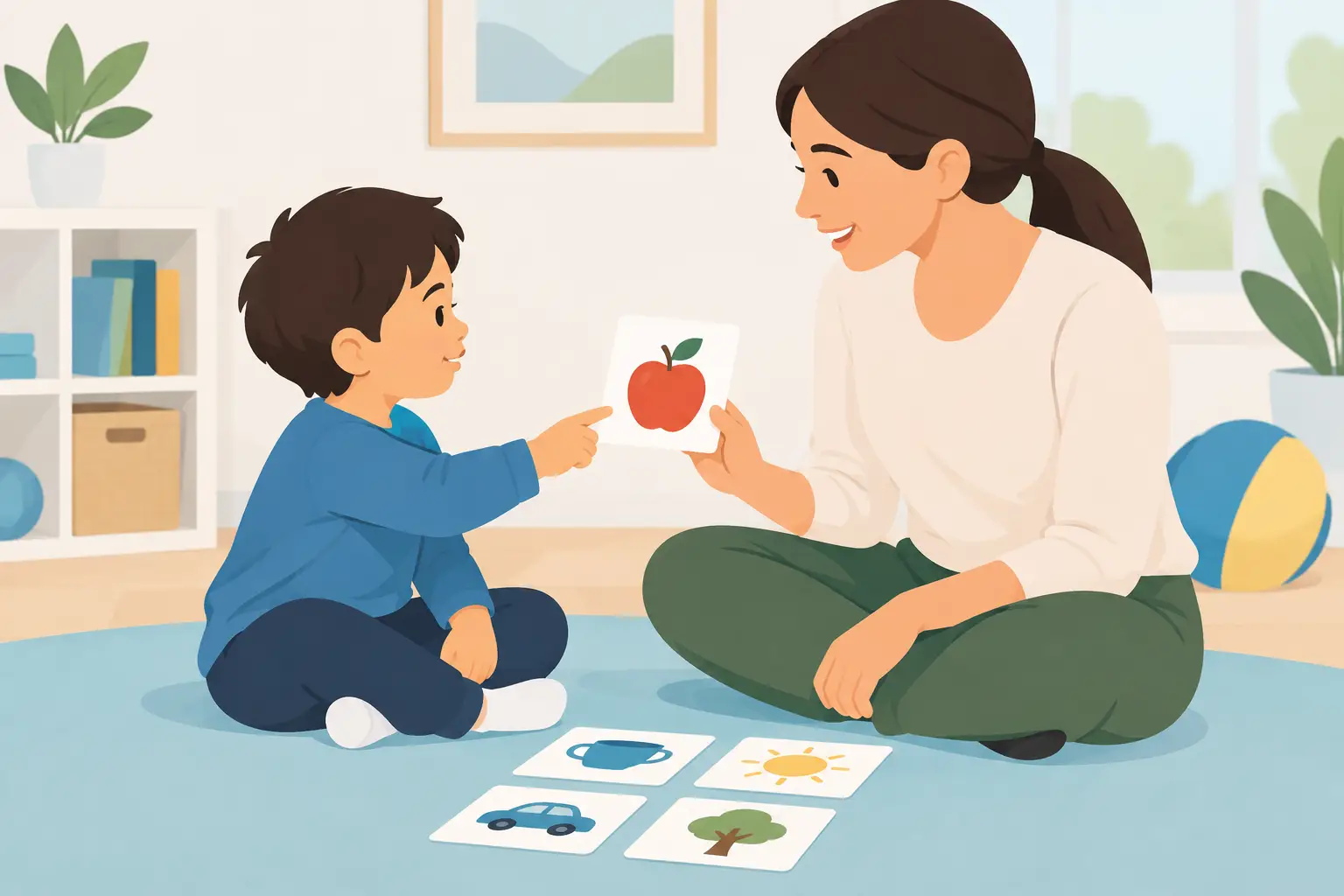
Modern, evidence-based ABA therapy does not assume that spoken language is the only meaningful outcome. A child may communicate effectively through pointing, leading an adult to an item, handing over a picture, typing, signing, or using an augmentative and alternative communication system, often called AAC. The purpose is to give the child reliable ways to be understood.
A Board Certified Behavior Analyst, or BCBA, begins by learning about the child’s current skills, preferences, routines, and communication attempts. Parents and caregivers are essential to this process. You know the small signals that may be easy for others to miss: a look toward the pantry, a hand pull toward the door, or a particular sound that means “again.”
How ABA Therapy Supports Communication
ABA uses individualized teaching and positive reinforcement to build useful skills. Reinforcement simply means a response that makes a skill more likely to happen again. If a child points to bubbles and receives bubbles along with warm acknowledgment, they learn that pointing is a powerful way to communicate.
The goal is not to make a child perform for a reward. It is to create meaningful opportunities for them to see that communication works. Over time, a child may learn to request a favorite activity, ask for help, choose between snacks, protest appropriately, greet familiar people, or share attention around something interesting.
Beginning With Motivation and Choice
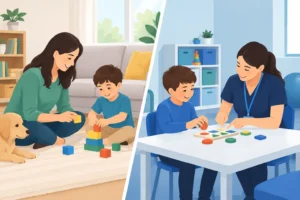
Communication is most likely to grow when it starts with something that matters to the child. A therapist may join a child while they play with cars, explore sensory materials, look at books, or move through an obstacle course. Rather than interrupting play, the therapist builds natural opportunities for the child to make a choice, request more, or invite someone into the activity.
This is often called natural environment teaching, or NET. It allows learning to happen in everyday moments instead of only at a table. For example, a child who enjoys swinging may practice selecting “swing” on a communication device, handing over a picture, or making a gesture before an adult helps them continue. The response is immediate and connected to what the child values.
Building Skills Beyond Requests
Requesting is often an early priority because it can reduce frustration and give a child more control over their environment. Still, communication growth should not stop there. A thoughtful ABA plan may also support skills such as responding to simple questions, identifying familiar people or objects, following functional directions, taking turns, and gaining attention appropriately.
As skills develop, therapy can focus on communication that is useful across settings. A child may learn to tell a caregiver they need a break, ask a teacher for help, or use a visual support to participate in a community outing. Progress may look different from family to family, but practical, meaningful milestones matter most.
AAC, Speech, and Collaboration With Other Providers
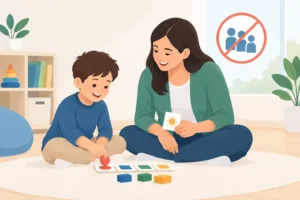
For some children, AAC is an important part of communication development. AAC can include picture-based systems, simple choice boards, sign language, tablets, and dedicated speech-generating devices. A child does not need to “earn” access to a communication system. If a tool helps them express themselves, it should be available and modeled consistently.
ABA therapists can support a child’s use of AAC during play, routines, and social activities. When speech-language services are also part of a child’s care, collaboration is especially valuable. Speech-language pathologists bring specialized expertise in speech, language, and communication systems, while ABA providers can help practice those communication skills across daily situations. With parent permission, coordinated care helps everyone work toward shared goals.
Whether spoken language becomes part of a child’s communication or not depends on many individual factors. Families deserve honest, hopeful guidance without promises that do not reflect their child’s unique development. The most meaningful measure is often whether the child has more ways to connect and more confidence that others will listen.
What a Personalized ABA Plan May Include
ABA therapy for non-verbal children should never follow a one-size-fits-all script. A BCBA-supervised plan is built around a child’s strengths, needs, developmental level, and family priorities. For one child, that may mean learning to request favorite foods without distress. For another, it may mean using a device to participate in school routines or practicing turn-taking with a sibling.
Therapy may address communication alongside daily living and social skills. Getting dressed, washing hands, transitioning from one activity to another, tolerating a new routine, and joining a game at the park all create natural moments for communication and independence.
Careful data collection helps the clinical team see what is working and what needs adjustment. Data should serve the child, not turn therapy into a checklist. If a strategy is not helping a child engage or communicate comfortably, the team should revisit the approach, listen to caregiver feedback, and make changes.
The Family’s Role in Lasting Growth
Parents and caregivers are not expected to become therapists. They are already experts on their child. A supportive ABA team provides coaching that fits real life, offering manageable ways to carry communication strategies into meals, bath time, errands, and play.
Consistency can help, but perfection is not required. A family may choose to keep a communication board near the kitchen table, model a few words on a device during snack, or pause briefly to let a child make a choice before offering an item. These small, repeated moments can build confidence for both child and caregiver.
For families balancing school schedules, siblings, and appointments, the right clinic should make collaboration practical. It should communicate clearly about goals, welcome questions, and coordinate with school teams when appropriate. Families in Centennial, Littleton, and the South Denver area may also benefit from a clinic that understands the routines of local schools and community spaces, from Cherry Creek School District campuses to an afternoon at deKoevend Park.
Choosing a Respectful ABA Provider
The relationship between your child, your family, and the therapy team matters. Look for BCBA oversight, individualized goals, transparent progress discussions, and a setting where your child is treated with dignity. Ask how the clinic supports alternative communication, how caregivers are involved, and how goals are adapted when a child’s needs change.
It is also reasonable to ask practical questions about scheduling, insurance verification, assessments, and therapy recommendations. A good provider explains the process in plain language and gives families space to make informed decisions.
At AuraCalm ABA Therapy, families can expect family-focused, evidence-based support designed around each child’s communication, independence, and growth. The path may involve small steps, changing needs, and plenty of learning along the way. Each time a child is understood more clearly, that is a milestone worth honoring.