

A child may communicate beautifully through pictures but struggle with transitions. Another may enjoy school routines yet need support joining play with peers. Customized ABA treatment plans recognize that these differences matter. Rather than asking a child to fit a pre-set program, thoughtful ABA therapy begins by understanding the child, their strengths, their needs, and the everyday moments that matter most to their family.
For parents in Centennial, Littleton, and South Denver, finding the right support can feel urgent and overwhelming after an autism diagnosis or when developmental concerns are growing. A personalized, BCBA-supervised approach can bring clarity: meaningful goals, a caring clinical team, and practical ways to build skills at home, school, and in the community.
What Makes an ABA Plan Truly Customized?
Applied Behavior Analysis, or ABA, is an evidence-based approach that uses positive reinforcement and careful observation to help children learn useful skills. A customized plan is not simply a standard list of activities with a child’s name added. It is a living clinical plan built around what helps that individual child participate more comfortably and independently in daily life.
The process starts with a comprehensive assessment. A Board Certified Behavior Analyst, known as a BCBA, learns about a child’s current communication, social interaction, play, self-care, learning readiness, and behavior patterns. The assessment also considers what the child enjoys, what environments feel supportive, and which situations may be challenging.
Family input is central. Parents and caregivers know their child best. They can explain what mornings look like, which routines are difficult, what brings joy, and what they hope will become easier over time. A plan for a preschooler who wants to communicate needs at snack time will look different from a plan for a teenager building independence, friendship skills, or community participation.
Goals Should Matter Beyond the Therapy Center
Strong ABA goals are specific, observable, and relevant to a child’s real life. That could mean learning to ask for help, waiting briefly for a preferred activity, following a visual routine, participating in shared play, or developing self-care skills. The purpose is not for a child to perform for a data sheet. It is to support more choices, connection, confidence, and access to everyday experiences.
A BCBA and therapy team break larger goals into manageable teaching steps. Progress is reinforced in ways that are meaningful to the child, which may include praise, a favorite game, movement, music, or time with a preferred activity. Positive reinforcement is not bribery. It is a planned teaching tool that helps a child understand which new skills lead to positive outcomes.
Goals should also change as a child grows. Once a skill becomes comfortable and consistent, the team can help the child use it with different people, in different places, and during naturally occurring routines. This is called generalization. A child who requests a toy during a therapy session, for example, may gradually practice requesting help at home, in a classroom, or while visiting deKoevend Park with family.
The Right Pace Depends on the Child
Families sometimes ask how quickly their child should progress or how many therapy hours are needed. There is no one answer. Recommendations depend on the child’s assessed needs, age, current skills, family goals, school schedule, and tolerance for services.
More hours are not automatically better if they leave a child exhausted or limit valuable family, school, or community experiences. On the other hand, consistent practice may be helpful when a child is learning foundational communication or daily living skills. A quality provider explains its clinical recommendation clearly, revisits it regularly, and makes adjustments based on data and the child’s well-being.
How Customized ABA Treatment Plans Use Data With Care
Data collection is part of ethical ABA care because it helps a clinical team make decisions based on more than impressions. Therapists may record how often a child uses a communication skill, how independently they complete a routine, or what support helps them participate successfully in an activity.
For families, data should translate into understandable answers. Is the skill becoming easier? Is a teaching strategy helping? Does a goal need to be broken into smaller steps? Is the child using the skill outside of therapy? Your child’s BCBA should review progress with you and explain any changes in plain language.
Data is useful, but it is not the whole child. A supportive team also pays attention to engagement, comfort, preferences, family priorities, and the quality of interactions. Joyful learning matters. When therapy is play-based, respectful, and responsive, children have more opportunities to build skills in ways that feel encouraging rather than pressured.
Family Collaboration Is Part of the Plan
Children do not live only in a therapy center, so families should never be treated as observers on the sidelines. Customized care includes collaboration with parents, guardians, and other caregivers from the beginning. This may involve regular check-ins, parent coaching, and simple strategies that can fit into existing routines.
Parent coaching is not about giving families a long list of tasks to complete perfectly. It is about helping caregivers understand why a strategy works and how to use it in realistic moments, such as getting ready for school, sharing a meal, playing with siblings, or preparing for bedtime. Even small, consistent changes can support meaningful growth.
When appropriate and with family consent, a collaborative ABA team may also coordinate with school staff or other providers. For children in Littleton Public Schools or Cherry Creek School District, alignment can help ensure that adults are working toward compatible goals while respecting each setting’s role and responsibilities.
Questions Parents Can Ask a Potential Provider
Choosing an ABA clinic is a significant decision. It is reasonable to ask who will supervise your child’s care, how often the BCBA will review progress, and how the clinic includes families in goal setting. You can also ask how therapy is adapted when a child is not engaged, how skills are practiced in natural settings, and how the clinic communicates with parents.
Pay attention to whether the answers feel clear and respectful. A trustworthy provider should welcome questions, explain clinical terms without talking down to you, and be transparent about scheduling, insurance verification, and anticipated next steps. For many families, practical factors such as location, appointment availability, and the ability to coordinate with school also matter greatly.
What Personalized Care Can Look Like Over Time
A child’s plan may begin with building trust and identifying motivating activities. From there, sessions can incorporate natural environment teaching, often called NET. NET uses real play and daily routines as learning opportunities. Instead of practicing language only at a table, a therapist might support a child in requesting a turn during a game, choosing an art material, or asking a peer to play.
Some skills may benefit from more structured teaching in short, positive learning opportunities. Others are best practiced in the flow of play, conversation, community outings, or family routines. Effective ABA does not rely on a single format. The clinical team selects approaches based on the goal, the child’s learning style, and what promotes meaningful participation.
As children gain skills, the focus may shift. A young child may move from early communication to cooperative play and classroom readiness. An older child may work toward flexible routines, self-advocacy, independent living tasks, or social confidence. Progress is rarely a straight line, and temporary setbacks can happen during changes in routine, school demands, or developmental transitions. A compassionate team responds by looking at the data, listening to the family, and adapting support thoughtfully.
Finding Support Close to Home
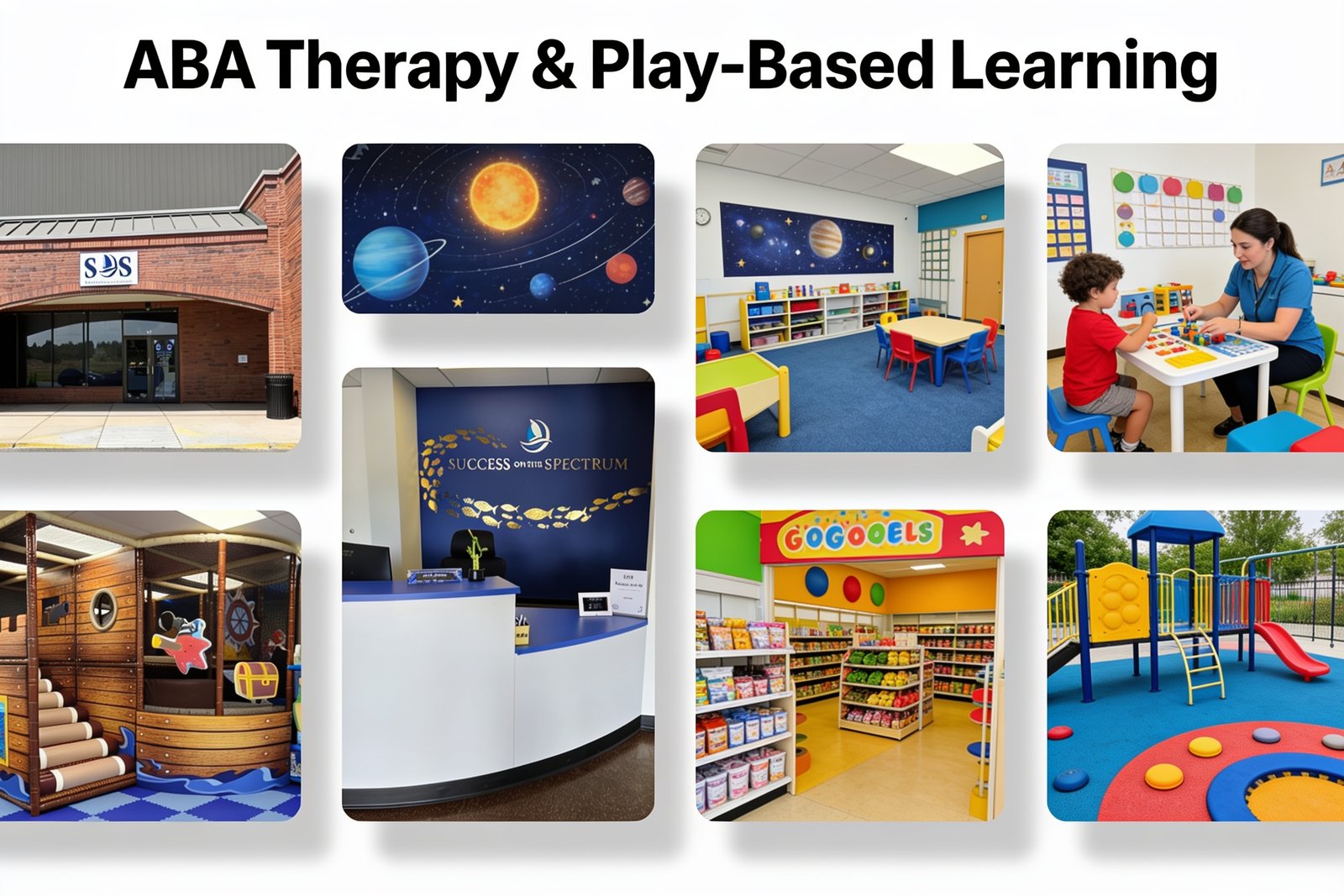
Families deserve care that is clinically sound and genuinely kind. At Success On The Spectrum Centennial ABA Therapy, families can expect BCBA-supervised, family-focused services designed around each child’s strengths, needs, and meaningful milestones. A local clinic can also make it easier to keep therapy connected to the routines and community spaces that shape a child’s day.
If you are looking for autism therapy in Centennial, Littleton, or the 80122 area, start by asking how a provider creates individualized goals and includes your family in every stage of care. The best plan is not the one that looks most impressive on paper. It is the one that helps your child experience more connection, capability, and joyful learning in the life they already live.
Every Child Can Thrive. Let’s Start Together.
If you’re ready to help your child build a strong foundation for school and life, we’re ready to help.
 Success On The Spectrum Centennial 7562 S University Blvd, Ste FF, Centennial, CO 80122
 720-372-2659
 centennial@successonthespectrum.com
 successonthespectrum.com/location/Centennial/
Schedule your free consultation today — and let’s give your child the best possible start. 
Serving Centennial, Denver, Aurora, Littleton, Castle Pines, Highlands Ranch, Lone Tree, Englewood, Parker, and surrounding communities.