
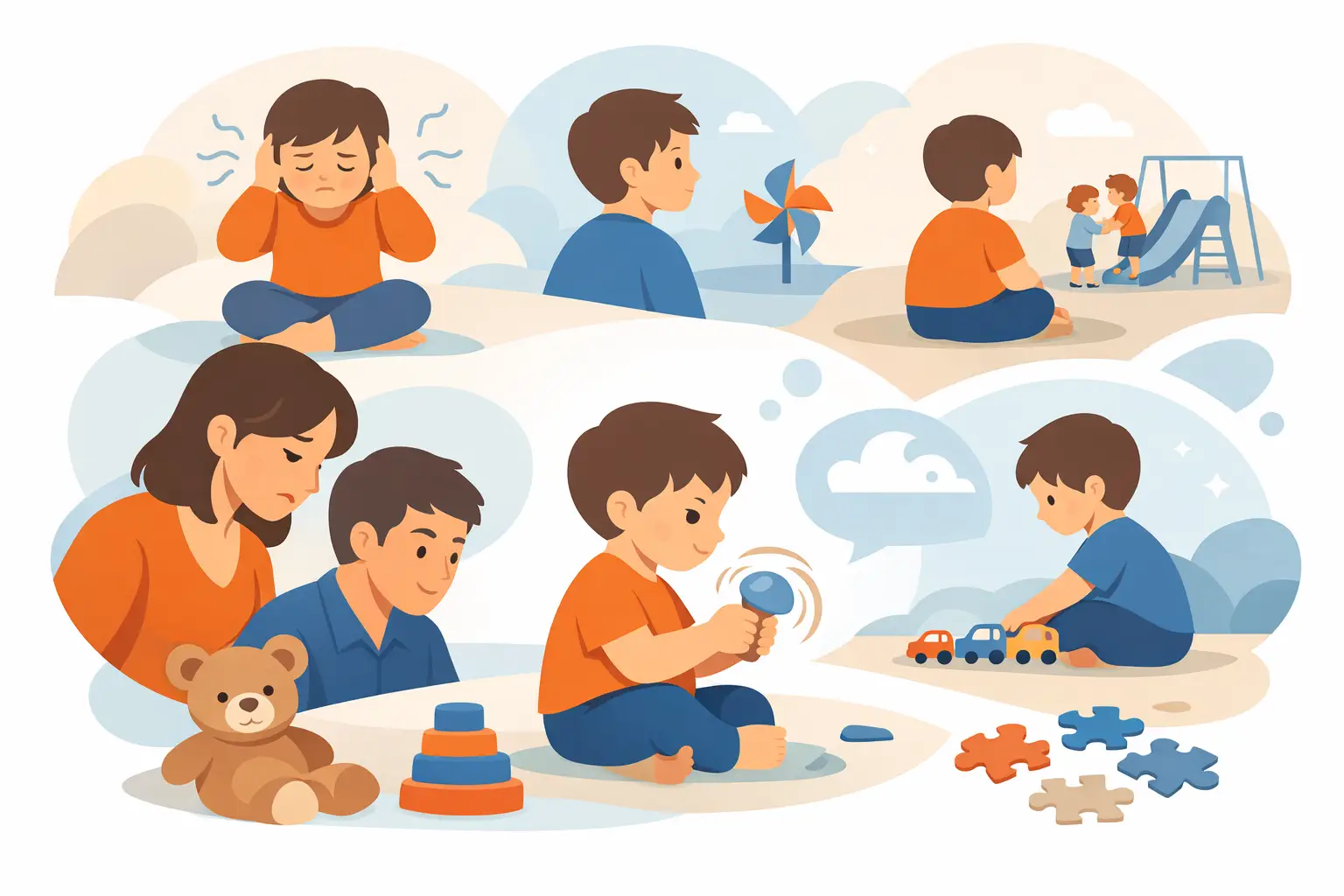

A toddler may be happily lining up toy animals, avoiding a noisy birthday party, or using fewer words than peers. Any one of these moments can be part of typical development. But when parents notice a pattern, questions often follow. Recognizing possible signs of autism in toddlers is not about labeling a child based on one behavior. It is about understanding their communication, play, sensory needs, and development well enough to seek supportive guidance when it may help.
Autism spectrum disorder, or ASD, is a developmental difference that can affect social communication, patterns of behavior, play, and sensory processing. Every autistic child is different. Some toddlers have clear developmental differences early on, while others show signs more gradually. A professional evaluation is the appropriate way to determine whether autism or another developmental concern may be present.
Signs of Autism in Toddlers Can Look Different
Toddlers develop on their own timelines, and a late word or a shy response does not automatically point to autism. What often matters most is the overall pattern across settings and over time. Parents know their child best, so observations from everyday life – meals, bath time, playdates, errands, and preschool drop-off – are valuable.
Possible signs often fall into two connected areas: social communication differences and repetitive, highly focused, or sensory-related behaviors. A child does not need to show every sign for a family to benefit from speaking with a pediatrician or developmental professional.
Differences in social connection and communication
Some toddlers may use fewer gestures to communicate. For example, they may not often point to show a parent something interesting, wave goodbye, nod yes, or bring a favorite toy over to share enjoyment. They may lead an adult by the hand to something they want rather than looking back, pointing, or using words.
A child may also respond inconsistently when their name is called. This can have many explanations, including hearing differences, focused play, or developmental variation, so it should not be interpreted on its own. Still, it is worth mentioning when it happens alongside other communication concerns.
Other social communication differences can include limited eye contact during interaction, less interest in back-and-forth games such as peekaboo, or difficulty joining another person’s play. Some toddlers may prefer to play independently much of the time. Others want connection but may not yet know how to start or sustain an interaction in a way adults expect.
Language development can vary widely. A toddler may have delayed spoken language, repeat words or phrases they have heard, or use words in a way that seems unusual for the situation. Some children have many words but find it harder to use language socially, such as answering simple questions, taking turns in a conversation, or talking about an experience with another person.
Repetitive play, routines, and sensory differences
Toddlers naturally enjoy repetition. Watching a favorite scene, asking for the same bedtime book, or sorting blocks by color can all be ordinary parts of early learning. Concerns may arise when repetitive actions are frequent, difficult to interrupt, or accompanied by broader developmental differences.
Possible signs include repeatedly spinning wheels rather than using a toy car in varied play, lining up objects in a particular way, watching items move from the corner of the eye, or becoming intensely focused on one part of an object. Some children may flap their hands, rock, pace, or repeat certain movements when excited, overwhelmed, or deeply engaged.
Changes in routine can also feel especially hard for some toddlers. A different route home, a new cup, or an unexpected transition may lead to a strong reaction. These responses are not misbehavior. They can reflect difficulty with flexibility, communication, sensory regulation, or uncertainty about what comes next.
Sensory experiences may be another clue. A child might cover their ears during hand dryers or crowded gatherings, avoid certain clothing textures, dislike messy play, seek strong movement, or closely watch lights and moving objects. Sensory preferences alone do not indicate autism, but they are useful information to share during an evaluation.
When Developmental Changes Need Prompt Attention
A loss of skills deserves timely attention. If a toddler stops using words they previously used, becomes less responsive socially, or loses other established skills, contact their pediatrician promptly. It does not mean a parent caused the change or that one outcome is certain. It means the child deserves a careful, individualized developmental assessment.
Parents can also seek guidance when they have a persistent feeling that something is different, even if friends or relatives offer reassurance. Well-meaning comparisons can be confusing because toddlers develop unevenly. One child may speak early and struggle with transitions; another may have strong problem-solving skills and need more support with shared attention or play. Development is not a competition, and concerns do not need to reach a crisis point before a family asks for help.
What to Do if You Notice Possible Signs
Start by writing down specific observations. Rather than saying, “My child does not communicate,” note what you see: “She pulls me to the pantry but does not point to the snack,” or “He does not look up when I call his name during play.” Include when it happens, what was going on before, and what helps. Short videos of everyday behavior can also help a pediatric provider understand concerns that may not appear during a brief appointment.
Schedule a conversation with your child’s pediatrician and ask about developmental screening and autism screening. Pediatric practices commonly use standardized screening tools at key toddler visits, but screening is not a diagnosis. Depending on the results and your child’s needs, the pediatrician may recommend hearing testing, early intervention services, a comprehensive developmental evaluation, or referrals to qualified specialists.
If your child is under age 3, early intervention may be available based on developmental needs, even while an autism evaluation is underway. Children do not need to wait for a final diagnosis to begin receiving support for communication, social engagement, daily routines, or other identified goals.
How Support Can Build Everyday Skills
Early, individualized support focuses on meaningful skills, not on making a child appear like anyone else. For many families, that means helping a toddler communicate needs more clearly, participate in daily routines with less frustration, build play skills, or feel safer navigating new environments.
Modern ABA therapy is evidence-based and can be highly play-based, particularly for young children. Under BCBA supervision, a care team may use positive reinforcement to encourage useful skills and natural environment teaching to practice them during real activities. Natural environment teaching means learning can happen while playing with bubbles, choosing a snack, getting ready to go outside, or taking turns with a caregiver.
The best plan is tailored care. A child who is motivated by music may learn through songs and movement; another may respond best to puzzles, vehicles, or outdoor play. Family involvement matters because parents and caregivers are the people who know what makes a day joyful, difficult, or successful. Collaborative care should respect a child’s strengths, preferences, comfort, and dignity at every stage.
Preparing for an evaluation or therapy consultation
Bring your observations, any developmental records, and questions about your child’s current strengths and needs. It can help to ask how goals are selected, how progress is measured, how parents are involved, and how services can fit around preschool or family routines. Families may also want to ask about insurance benefits and whether the provider coordinates with other members of the child’s care team.
For families in Centennial, Littleton, and the South Denver area, local support can make follow-through more manageable. Whether a child is preparing for a Littleton Public Schools program, adjusting to a new preschool routine, or practicing community skills at places such as deKoevend Park, therapy goals should connect to the life your family actually lives.
Noticing developmental differences can bring uncertainty, relief, sadness, or many feelings at once. There is no need to have every answer before taking the next step. A thoughtful evaluation and family-focused support can give your child more opportunities for joyful learning, meaningful connection, and steady growth at their own pace.