
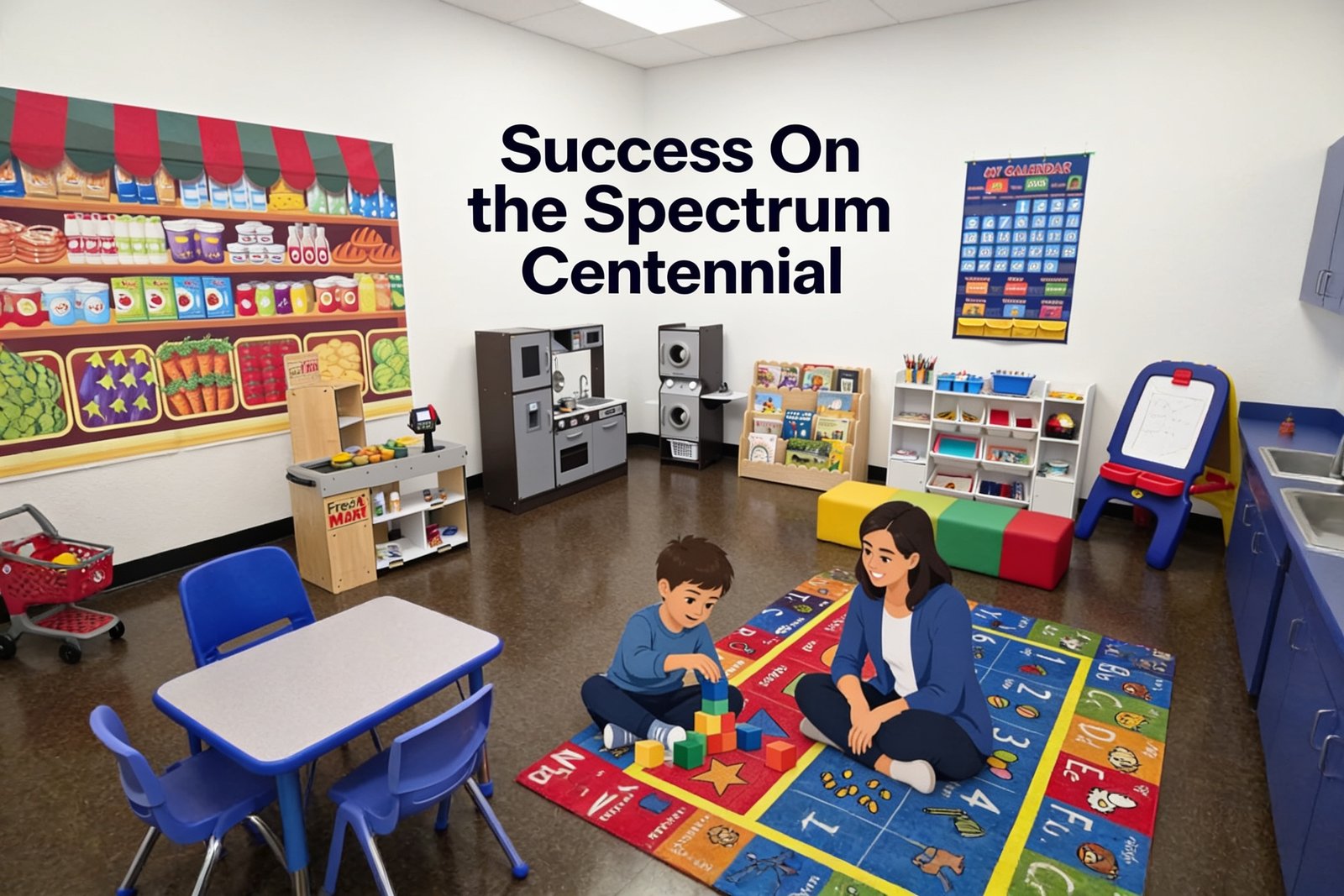

A search for ABA therapy Centennial CO often happens after a long stretch of questions: Why is communication so hard right now? Will my child be understood? How can we fit support into school, work, and family life? You deserve clear answers, not more pressure. Quality ABA therapy is a collaborative, evidence-based service designed to help children build practical skills through positive, individualized teaching.
For families in Centennial, Littleton, and the South Denver area, the right clinic should feel both clinically capable and genuinely welcoming. Therapy should support joyful learning, protect your child’s dignity, and focus on milestones that make daily life more connected and manageable.
What ABA Therapy Means for Your Child
Applied Behavior Analysis, or ABA, is a scientific approach to understanding how people learn skills and how their environment affects behavior. In pediatric autism therapy, ABA is used to teach meaningful abilities such as communication, self-care, play, social interaction, flexibility, and participation in everyday routines.
ABA is not one identical program for every child. A toddler learning to request a favorite toy, an elementary-aged child practicing peer interactions, and a teenager building independent living skills may all benefit from ABA, but their goals and teaching approaches should look very different. Tailored care starts by understanding what matters to the child and family.
Modern ABA often includes natural environment training, sometimes called NET. This means learning is incorporated into play and daily activities instead of being limited to a table or worksheet. A therapist may use a game, snack time, a trip to the playground, or a shared art activity as an opportunity to practice communication, turn-taking, or following a routine. Structured teaching can also be useful for certain skills, particularly when a child benefits from clear repetition and a predictable setup. The best balance depends on the learner.
Positive reinforcement is another central ABA concept. In simple terms, when a child uses a helpful skill and experiences a meaningful positive outcome, they are more likely to use that skill again. Reinforcement is personal. For one child, it may be praise or a high-five; for another, it may be a favorite activity, extra time with a preferred toy, or the satisfaction of successfully completing a task. Effective therapy observes what is genuinely motivating rather than assuming all children respond the same way.
What BCBA-Supervised Care Should Include
Families should be able to ask who is designing and overseeing therapy. A Board Certified Behavior Analyst, or BCBA, is a trained professional who assesses a child’s needs, develops an individualized treatment plan, reviews progress data, and supervises the clinical team. Direct therapy may be delivered by trained behavior technicians, while the BCBA remains actively involved in clinical decisions.
Before services begin, a comprehensive assessment helps identify strengths, current skills, family priorities, and areas where support may help. This process is not about reducing a child to a checklist. It is an opportunity to learn how your child communicates, what they enjoy, what situations are challenging, and which goals could make the biggest difference at home, in school, and in the community.
Goals should be specific and relevant. Rather than a vague goal such as “improve behavior,” a care plan may address requesting help, participating in a bedtime routine, transitioning between activities, using coping strategies with support, or joining a group activity for a comfortable amount of time. Families should understand why each goal matters and how progress will be measured.
Good clinical care also changes when the data and the child’s needs call for it. If a teaching strategy is not helping, the team should review the information, listen to caregiver input, and adjust thoughtfully. Progress is rarely a straight line. Some skills develop quickly, while others require more time, practice, or a different approach. Consistent communication helps families see the growth that may otherwise be easy to miss.
Choosing ABA Therapy in Centennial CO
Finding a local provider can feel urgent, especially after a new autism diagnosis or when a child is struggling with daily routines. It can help to look beyond availability alone. Convenience matters, but so do safety, supervision, family involvement, and whether the setting feels right for your child.
When speaking with an ABA provider, ask how BCBAs participate in assessment and ongoing care, how therapists are trained, and how often treatment plans are reviewed. Ask what a typical session looks like, how the clinic incorporates play and a child’s interests, and how caregivers receive updates. A provider should welcome these questions and explain its process in language you can understand.
It is also reasonable to ask about scheduling. Some children benefit from clinic-based sessions, where they can practice routines and social learning in a structured setting. Others may need schedules that coordinate carefully with school, family routines, and other services. Therapy recommendations should reflect clinical need while respecting that children need time for school, rest, family connection, and the activities they enjoy.
For families near the Southglenn area, deKoevend Park, or neighborhoods served by Littleton Public Schools and Cherry Creek School District, local care can make consistency easier. A shorter drive may mean less disruption before and after sessions, and it can make caregiver meetings more realistic to attend. Still, the closest option is not automatically the best fit. Consider whether the clinic’s approach, team communication, and environment match your family’s needs.
Family Participation Makes Skills More Useful
The people who know a child best are essential to the therapy process. Caregiver collaboration does not mean parents are expected to become therapists or manage every moment perfectly. It means the clinical team listens to what is working at home, teaches practical strategies when appropriate, and builds goals around real family routines.
A caregiver may share that mornings are difficult, that a child communicates differently with siblings, or that a favorite game creates a wonderful opening for interaction. Those details help the therapy team make learning more meaningful. When a child practices a skill in several settings and with different people, that skill is more likely to become useful beyond the therapy room.
Family-focused ABA should also respect each household’s culture, schedule, and priorities. One family may want to focus first on communication at meals. Another may be most concerned about preparing for a school transition or helping a teenager gain confidence with community routines. There is no single correct sequence of goals.
Insurance and Getting Started
Insurance questions can add stress at a time when families are already managing a great deal. Many Colorado families use commercial insurance or Colorado Medicaid benefits for medically necessary ABA services, but eligibility, authorizations, provider networks, and coverage requirements vary by plan. A clinic’s intake team can often help explain the verification process, though your insurer provides the final coverage determination.
Gathering a diagnostic report, insurance information, referral details if required by your plan, and school or developmental records can make an initial conversation more efficient. If you do not have every document yet, do not let that stop you from contacting a provider. An intake coordinator can explain what is needed and what the next steps may look like.
At Success On The Spectrum Centennial, families can expect supportive guidance from the first conversation through assessment, goal development, and ongoing review. The purpose is not to rush children through a preset program. It is to create a thoughtful path toward skills that matter in their lives.
The right support can begin with one clear conversation. If you are looking for ABA services in Centennial or nearby Littleton, ask questions, visit the setting if possible, and pay attention to whether the team sees your child as a whole person with strengths, preferences, and meaningful potential for growth.
 Ready to See the Difference for Yourself?
 Success On The Spectrum Centennial
7562 S University Blvd., STE FF
Centennial, CO 80122
 Call Now: 720-372-2659
 Email: centennial@successonthespectrum.com
Book a Facility tour of SOS Centennial online
 Learn More: https://successonthespectrum.com/location/centennial/
Follow us on social media:
 Facebook – Success On The Spectrum Centennial
 Instagram – @soscentennial
“Where Every Child’s Progress Is Our Purpose.”
Don’t wait. Don’t wonder.
Schedule your free tour today and see why families across the Denver Metro area are choosing Success On The Spectrum Centennial.
Enrollment Now Open • No Waitlist • BCBA-Led Care • Play-Based ABA




One Comment